
For most commuters, the choice between solid and pneumatic scooter tires comes down to one practical trade-off: solid tires reduce puncture and pressure maintenance, while pneumatic tires add air cushioning but require regular inflation and can develop flats.
Neither tire type is automatically better in every situation. Comfort and control also depend on tire size, tread and rubber compound, suspension, scooter geometry, rider and cargo weight, speed, and the surface under the wheels. Use this guide together with our complete electric scooter buying guide to match the entire scooter to your commute.
Quick answer
Choose solid tires when avoiding ordinary punctures and routine pressure checks matters most, especially on shorter paved trips. Consider pneumatic tires when extra cushioning is valuable and you are willing to inspect them, maintain the exact recommended pressure, and repair a possible flat. On rough roads, compare suspension and wheel size as carefully as tire type.
What Are Solid Scooter Tires?
Solid tires contain no pressurized air chamber. Depending on the design, they may use solid rubber, internal cavities, or a honeycomb-like structure to provide some flexibility. Because there is no tube or air-filled chamber to puncture, an ordinary nail or small piece of glass cannot cause the same sudden loss of tire pressure that it can in a pneumatic tire.
That does not make a solid tire maintenance-free. The tread can wear, rubber can crack or separate, and the tire or wheel can still be damaged by impacts. Solid tires should be inspected before riding and replaced when they are worn or damaged.
What Are Pneumatic Scooter Tires?
Pneumatic tires use compressed air to support the scooter and rider. They may contain an inner tube or use a tubeless construction. The air volume can absorb part of the vibration and small impacts from pavement, which is why pneumatic tires are often chosen for ride comfort.
They also add a maintenance task. Pressure must be checked when the tires are cold and adjusted to the specification for the exact scooter and tire. Too little pressure can increase rolling resistance, damage the tire, affect handling, and make the motor work harder. Too much pressure can reduce cushioning and may exceed the manufacturer's limit.
Solid vs Pneumatic Tires at a Glance
| Factor | Solid tires | Pneumatic tires |
|---|---|---|
| Punctures | No ordinary air puncture or pinch flat | Can puncture or lose pressure |
| Ride cushioning | Usually transmits more surface vibration; suspension can help | Air provides additional cushioning when correctly inflated |
| Routine care | Inspect tread, rubber, seating, and wheel condition | Inspect condition and check pressure regularly |
| Roadside problem | A puncture will not deflate the tire, but damage still requires service | A flat may stop the trip and require a tube or tire repair |
| Range influence | No pressure loss, but design and road vibration still affect efficiency | Correct pressure matters; underinflation increases rolling resistance |
| Best fit | Riders prioritizing low puncture risk and simpler routine care | Riders prioritizing cushioning and prepared to maintain pressure |
These are common tendencies rather than promises. A large, well-designed solid tire with suspension may feel better than a small pneumatic tire at the wrong pressure, and two pneumatic tires can behave differently because of their size, construction, tread, and rubber compound.
Comfort: Tire Type Is Only One Part
Air can act as a small suspension system, so pneumatic tires generally soften road texture more naturally than solid tires of a similar size. This can matter on cracked pavement, construction joints, coarse asphalt, and longer trips.
However, the complete scooter determines the ride. Front or dual suspension can reduce some impacts. Larger-diameter wheels can meet small surface changes more gradually. A longer wheelbase, suitable deck or seat position, frame stiffness, speed, and rider posture also change how the scooter feels.
Do not use comfort as a reason to ride over potholes, curbs, loose gravel, or debris at speed. The U.S. Consumer Product Safety Commission warns that the small tires on electric scooters can stop suddenly when they meet obstacles or uneven surfaces. Slow down, scan ahead, and keep both hands on the handlebar.
Punctures and Commuting Reliability
A solid tire removes one common reason for a missed commute: a loss of air caused by a puncture or pinched tube. This may be especially useful when the route passes construction debris, the scooter must be ready every morning, or the rider does not have a convenient place to repair a tire.
Pneumatic tires require more preparation. Learn whether the scooter uses a tube or tubeless construction, which valve and pump fit it, and whether replacement parts and local service are available. Inspect for embedded debris, cuts, bulges, damaged valves, and pressure loss.
Do not continue riding a pneumatic tire that is visibly low or damaged. Do not continue riding a solid tire with severe wear, cracking, separation, or wheel damage. A tire that cannot support predictable steering and braking needs service before the next trip.
Tire Pressure, Efficiency, and Range
Pneumatic tire pressure affects both the ride and the energy required to roll. Underinflation lets the tire deform more, increasing rolling resistance and heat. Segway's F3 Series manual warns that insufficient tire pressure can damage the tire, affect riding safety, and cause the motor to work too hard and overheat.
There is no universal scooter tire pressure. Use the figure in the manual or on the tire for the exact model, follow the manufacturer's measuring procedure, and never exceed the permitted limit. Check both tires because they may not always use the same specification.
Solid tires avoid pressure-related range loss, but they do not make range constant. Surface roughness, speed, rider and cargo weight, hills, temperature, starts, wind, battery condition, and scooter design still matter. Our electric scooter range guide explains how to build a realistic route estimate.
Grip, Braking, and Wet Roads
Tire type alone does not determine grip. Tread, rubber compound, contact shape, pressure, temperature, wear, water, road contamination, load, and speed all affect traction. A pneumatic tire is not automatically safer in the rain, and a solid tire is not automatically unsuitable for every wet surface.
Reduce speed on wet paint, metal covers, leaves, loose gravel, ice, and standing water. Allow more stopping distance and avoid abrupt steering or braking. If the manufacturer prohibits wet-weather use or rates the scooter only for limited water exposure, follow that instruction.
Does Wheel Size Change the Choice?
Wheel diameter and tire type should be compared together. A 14-inch pneumatic tire and a 10-inch solid tire do not differ only because one contains air. Their diameter, width, frame design, riding position, vehicle weight, and intended use may all be different.
Larger wheels can approach small cracks and bumps at a gentler angle, but they also require a larger vehicle layout. Smaller wheels can support a more compact scooter, but small obstacles become more important. Measure storage and portability needs, then inspect the actual route instead of choosing from wheel size alone.
If a seat, basket, or larger frame is part of the decision, see our standing vs seated electric scooter comparison.
Two Real Commuter Tire Examples
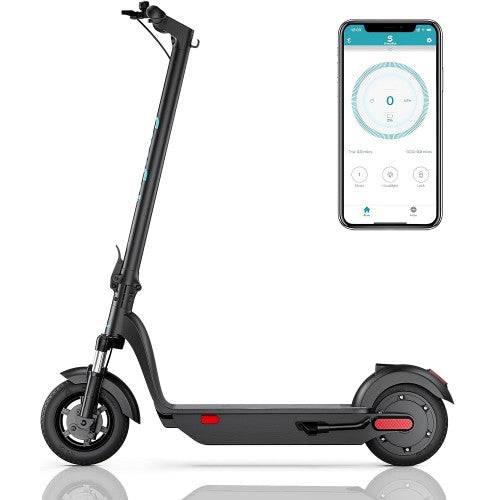
SmooSat MAX: 10-inch solid tires with front suspension
The SmooSat MAX product specifications list 10-inch solid tires and front suspension, along with a 500W brushless motor, 12Ah/561Wh battery, three speed modes, and manufacturer-rated range of up to 48 km. This combination shows why the complete system matters: the tires remove pressure checks and ordinary flats, while the front suspension is intended to help manage some road vibration.
It remains a compact standing scooter with relatively small wheels. The rider should still slow for cracks and obstacles, inspect tire wear and damage, and treat the published range as a best-case reference rather than a guaranteed daily distance.
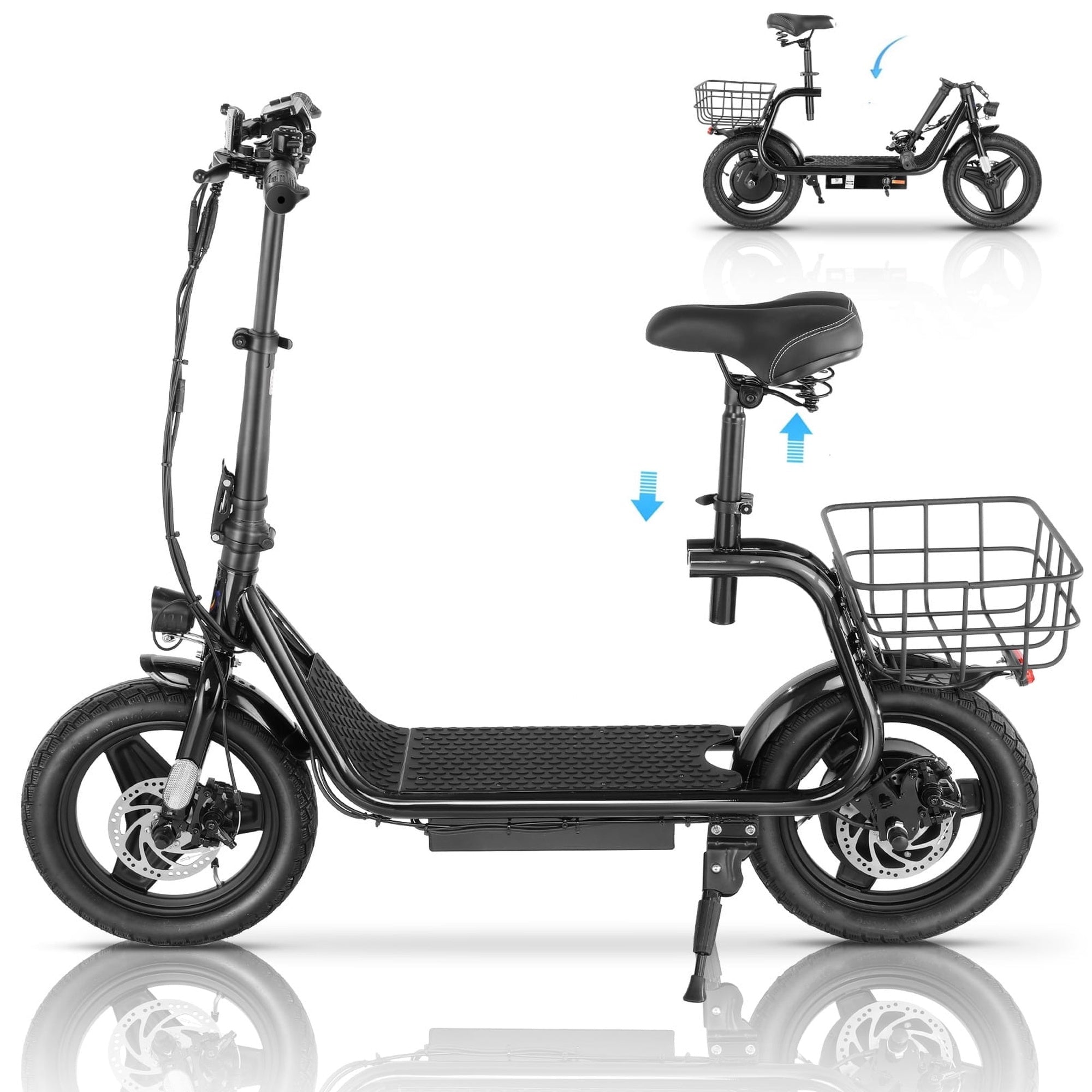
P1402 seated scooter: 14-inch pneumatic tires
The P1402 black seated model lists 14-inch pneumatic tires, a 750W brushless hub motor, adjustable seat, foldable handlebar, rear basket, front and rear brakes, LCD, and lights. The larger air-filled tires may appeal to riders who value cushioning and a seated format, provided they are comfortable checking pressure and handling a possible flat.
The current specifications do not list a suspension system, so tire cushioning should not be described as suspension. This is also a physically larger vehicle. Confirm net weight, storage, local vehicle classification, and permitted riding locations before choosing it for a commute.
Compare the Two Tire Examples
These products illustrate different tire and vehicle formats; they are not a controlled tire-only test.
Related Electric Scooter Guides
Choose Solid Tires When:
- avoiding ordinary punctures is a top priority;
- you do not want routine pressure checks;
- the normal route is relatively smooth and paved;
- you have compared the scooter's suspension and complete ride design; and
- replacement solid tires and qualified service are available when wear occurs.
Consider Pneumatic Tires When:
- extra air cushioning matters on your regular route;
- you are willing to check and adjust pressure;
- you understand the tube or tubeless repair requirements;
- replacement tires, tubes, valves, and service are accessible; and
- you will follow the exact manufacturer's pressure limits.
Pre-Ride Tire Checklist
- Inspect both tires. Look for wear, cuts, cracks, bulges, embedded debris, separation, or other damage.
- Check pneumatic pressure. Measure it using the exact model's procedure and specification.
- Confirm the wheels are secure. Do not ride if a wheel, axle, or tire appears loose or misaligned.
- Test brakes at low speed. Tire grip and braking must be predictable before entering traffic.
- Scan the route. Slow down for potholes, debris, gravel, wet surfaces, and construction joints.
- Stop when something changes. New vibration, pulling, noise, or pressure loss needs inspection.
The CPSC recommends inspecting tires, brakes, handlebars, lights, cables, and the frame before riding. Follow the scooter manufacturer's complete pre-ride and maintenance instructions, not only this tire checklist.
Frequently Asked Questions
Are solid scooter tires puncture-proof?
They cannot suffer an ordinary air puncture because they contain no pressurized air. However, they can still wear, crack, separate, or be damaged by impacts. Inspect them before riding and replace damaged tires.
Are pneumatic scooter tires more comfortable?
They generally provide more air cushioning than a similar solid tire, but complete ride comfort also depends on tire size and pressure, suspension, frame design, rider position, speed, load, and road surface.
How often should scooter tire pressure be checked?
Follow the schedule in the exact scooter's manual and check sooner if the scooter has been stored, the temperature changes, the tire looks low, or handling feels different. Do not guess a pressure from another model.
Do solid tires reduce electric scooter range?
There is no universal answer. Tire construction affects rolling behaviour, but scooter design, surface, speed, weight, hills, weather, and battery condition also affect range. A pneumatic tire at low pressure can increase rolling resistance, while a solid tire avoids that pressure loss.
Can tire sealant prevent flats?
Some tubeless or tube systems may allow a manufacturer-approved sealant, but compatibility varies. Sealant does not repair every puncture or structural damage. Follow the scooter and tire manufacturer's instructions rather than adding a generic product.
Are larger pneumatic tires always safer?
No. Larger diameter and air cushioning may help with some small surface changes, but safety also depends on tire condition, pressure, tread, brakes, speed, steering, vehicle design, rider skill, and the road. No scooter tire makes potholes or debris harmless.
Final Verdict
Solid tires are usually the more convenient commuter choice when puncture avoidance and simple routine care matter more than maximum cushioning. Pneumatic tires are often the better fit when the route makes air cushioning valuable and the rider is prepared to maintain pressure and handle possible flats.
Make the decision from the complete commute: inspect the pavement, measure trip length, consider storage and service access, and compare tire size, suspension, brakes, and vehicle format together. Tire type is important, but it is not the whole scooter.
Sources and Further Reading
- U.S. Consumer Product Safety Commission: Micromobility Information Center
- Segway: F3 Series User Manual
- NIU: Kick Scooter Tire Pressure FAQ
Last reviewed: July 2026. Product specifications and manufacturer instructions can change. Confirm current product details, tire pressure, maintenance guidance, and local rules before purchasing or riding.