
A 23 kg electric scooter may be manageable when it can be rolled into ground-level storage, but too heavy when it must be lifted into a trunk, carried through transit, or taken up stairs every day. The number alone cannot answer the question because shape, balance, grip points, carrying distance, frequency, and the person doing the lift all change the task.
Start by confirming that 23 kg is the net assembled scooter weight. Product pages sometimes show package weight, which can include the carton, foam, charger, tools, and accessories. Then test the complete route rather than deciding from a specification table. Our electric scooter buying guide covers the wider purchase decision; this article focuses on weight and handling.
Quick answer
A 23 kg scooter is not automatically too heavy, but it is not lightweight. It may suit a roll-in, roll-out commute with ground-level storage. It may be a poor fit for daily stairs, frequent vehicle loading, crowded transit, or anyone who cannot keep the folded scooter close, balanced, and under control.
Why 23 kg Is Not a Universal Limit
There is no single scooter weight that every adult can safely lift. A compact box with two handles is easier to control than a long scooter with moving wheels and weight distributed along the deck and stem. The same person may handle 23 kg once on level ground but not repeatedly on narrow stairs.
The Canadian Centre for Occupational Health and Safety explains that manual-handling risk depends on the load, task, and conditions. Risk can increase when an object is too heavy or awkward, difficult to grip, carried a long distance, handled while twisting, or moved over uneven, wet, icy, or poorly lit surfaces.
The revised NIOSH lifting equation uses 23 kg as a load constant before adjustment factors are applied. It is not a promise that every person can safely carry any 23 kg object. Distance from the body, lift height, twisting, frequency, grip quality, and other conditions can reduce the recommended weight for a specific workplace task. A folded scooter on stairs is also different from the controlled two-handed lifting scenario the equation evaluates.
Net Weight vs Package Weight
Net weight should describe the assembled vehicle itself. Package weight normally includes shipping materials and may include the charger or accessories. Sellers do not always label these values consistently, so ask what is included.
If a product lists only package weight, do not assume the scooter weighs exactly that amount. Package weight can still tell you that the delivered carton may be difficult to move, but it is not precise enough for planning daily stairs.
Ask the seller: "What is the assembled scooter's net weight, including its installed battery but excluding the box, charger, tools, and packaging?"
Weight Guide by Commuting Task
| Task | Why weight matters | What to test |
|---|---|---|
| Ground-level storage | Most movement may be rolling rather than lifting | Thresholds, tight turns, parking position |
| One or two steps | Short lift still needs stable grip and clear footing | Door, step height, landing space, approved carry point |
| Full stairway | Repeated steps, turning, and blocked vision raise difficulty | Longest flight, railing, width, wet or winter conditions |
| Car trunk | Load must be lifted away from the body and over an edge | Opening height, bumper depth, secure placement |
| Transit | Crowds, gaps, doors, and quick transfers reduce control | Agency policy, platform route, peak-hour restrictions |
| Office storage | Final placement may require lifting or rotating | Elevator, doorway, charging policy, secure floor space |
Shape and Balance Can Matter More Than One Kilogram
A scooter is long and asymmetrical. The battery and motor can make one end heavier, the wheels can rotate, and the handlebar may move unless the folded position is secured. These features can pull the load away from the body and make it harder to see the floor.
Compare the approved carry point, folded length, deck width, and whether the stem locks to the deck. A secure folded shape with a comfortable grip may be easier to control than a slightly lighter scooter that swings or has no suitable handhold.
Do not lift by brake cables, fenders, the display, throttle, basket, seat, or any part that is not approved as a carrying point. Our folding electric scooter checklist explains how folded security and latch design affect portability.
Stairs Change the Decision
Stairs add repeated lifting, changing foot height, restricted space, and the possibility that the scooter blocks your view. A narrow landing may also force twisting while the load is held.
CCOHS recommends assessing the load, grip, route, obstacles, stairs, uneven ground, ice, and whether help or a lifting aid is needed before moving a heavy or awkward object. Do not proceed when you are not confident that the complete task can be controlled.
If stairs are unavoidable, compare a lighter scooter, ground-floor storage, a building-approved ramp or moving aid, or a different commuting format. Do not ride the scooter on stairs and do not drag it by the handlebar or folding joint.
Vehicle Loading Is Not the Same as Floor Lifting
Loading a trunk or cargo area often requires reaching over a bumper and placing the scooter farther from the body. That can be more difficult than lifting the same weight vertically from a clear floor.
Measure the trunk opening and loading height. Clear the area first, fold the scooter according to the manual, and identify where it can be held without contacting hot motor parts or pinching fingers. Once inside, secure it so it cannot slide into passengers or cargo during braking.
How Often Will You Lift It?
Frequency changes the answer. A scooter lifted twice a month for a weekend trip creates a different demand from one carried four times every workday. Fatigue, winter clothing, bags, and time pressure can reduce control even when the first test lift feels possible.
Count every lift in a normal round trip: home stairs, transit entrance, office storage, car loading, and the return journey. Include the worst regular day, not only a dry afternoon with empty hands.
Test an Equivalent Load Carefully
If the exact scooter cannot be tested, use an object of similar weight only for a conservative ground-level comparison. The object will not reproduce the scooter's length, moving wheels, grip, or balance, so passing that test does not prove the scooter will be manageable.
- Clear the floor and intended route.
- Wear the footwear normally used for the commute.
- Keep the test close to the ground and avoid stairs at first.
- Stop if the grip, balance, or effort does not feel controlled.
- Do not test alone when the load could trap, strike, or unbalance you.
People with an injury, medical condition, pregnancy, or uncertainty about lifting should seek individual guidance from a qualified health professional rather than using a general weight number.
Two Product-Page Weight Examples
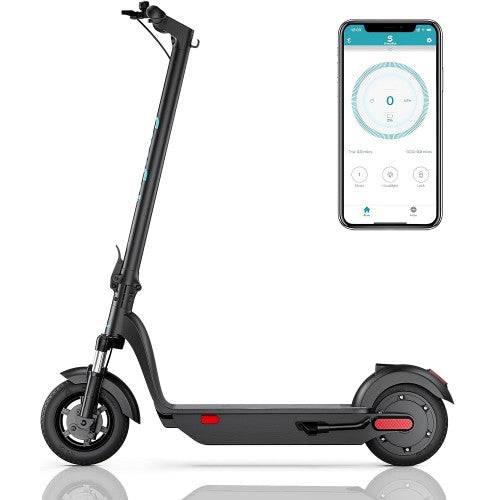
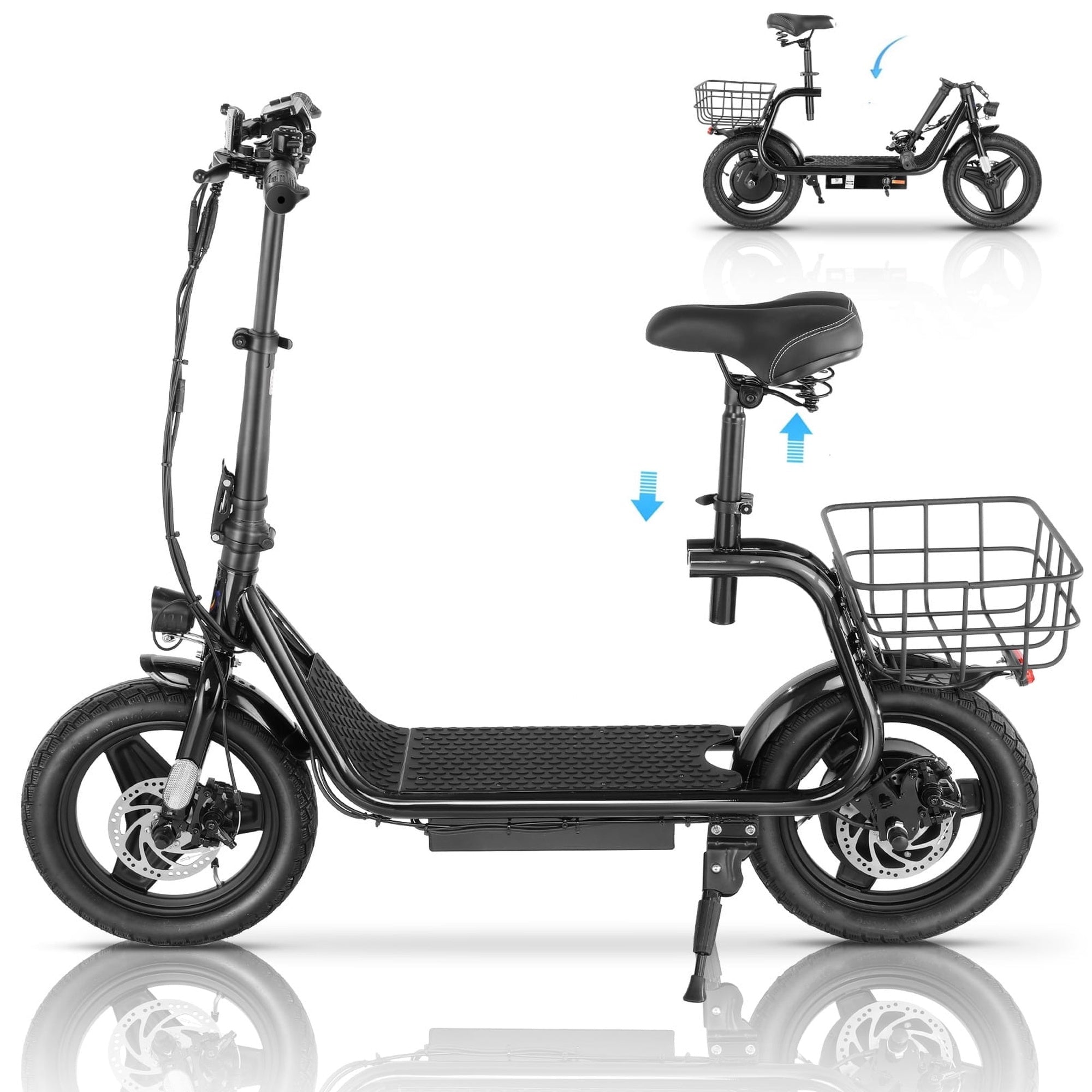
The SmooSat MAX page currently lists a package weight of 23.4 kg. The P1402 seated scooter page lists a package weight of 32.3 kg. Neither figure should be presented as confirmed net vehicle weight. Ask for net weight before comparing daily carrying effort.
Review the Two Formats
Use these pages to compare format and listed shipping information, then request the assembled net weight needed for your route.
Ontario Weight Rules Are Not a Portability Test
Ontario's current electric kick-style scooter pilot lists a maximum vehicle weight of 45 kg for a qualifying electric kick-scooter. Being under that regulatory maximum does not mean a scooter is easy or appropriate to carry. The pilot also includes requirements for power, speed, equipment, riding position, and municipal permission.
A 23 kg scooter may be below the provincial maximum while still being too awkward for one rider's stairs. Legal classification and personal portability are separate questions.
Electric Scooter Weight Checklist
- I confirmed net assembled weight, not only package weight.
- I counted every lift in the complete round trip.
- I measured stairs, landings, doors, elevators, and vehicle openings.
- I identified the manufacturer-approved carrying point.
- The folded scooter stays securely closed while carried.
- I can keep the load close without blocking my view of the floor.
- I considered winter footwear, wet surfaces, bags, and fatigue.
- I have a ground-level or assisted alternative if the lift is not controlled.
Frequently Asked Questions
Is 23 kg heavy for an electric scooter?
It is substantial for a long, awkward object. It may be manageable for rolling and occasional short lifts, but unsuitable for repeated stairs or transit. The route, grip, balance, and individual capacity matter more than the label alone.
Is the 23 kg NIOSH number a safe lifting limit?
No. It is a starting load constant used in an equation for specific two-handed workplace lifting tasks. Adjustment factors can reduce the recommended weight, and the equation does not make every 23 kg object safe for every person or situation.
Can a heavy scooter still be portable?
It can be portable when most movement is on its wheels and storage is accessible. Folding dimensions, secured balance, and vehicle loading still matter. Portable does not necessarily mean easy to carry.
Should I carry an electric scooter up stairs?
Only if the manufacturer permits the carrying method and you can control the entire task with clear footing and vision. Do not proceed when the load feels too heavy or awkward. Ground-level storage or a lighter model may be the better choice.
Does removing the battery make a scooter easier to carry?
Only remove a battery if the exact model is designed for user removal and the manual explains the procedure. Do not disconnect wiring or modify a fixed battery to reduce weight.
Final Verdict
A 23 kg electric scooter can work well for a commute built around rolling, elevators, and ground-level storage. It can be too heavy for daily stairs, repeated trunk loading, or crowded transit even when the rider can lift 23 kg in another shape.
Confirm net weight, map every lift, and test the most difficult regular part of the route conservatively. If the task cannot be controlled without twisting, blocked vision, or unstable footing, choose a lighter scooter or a different storage plan.
Sources and Further Reading
- CCOHS: Manual Materials Handling Introduction
- CCOHS: Manual Materials Handling General Practice
- CCOHS: Revised NIOSH Lifting Equation
- Ontario: Electric Kick-Style Scooter Requirements
Last reviewed: July 2026. This general information is not an individual lifting assessment. Product specifications and local rules can change; confirm the exact model and route before purchasing.